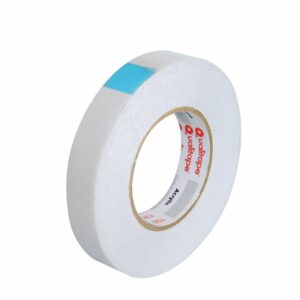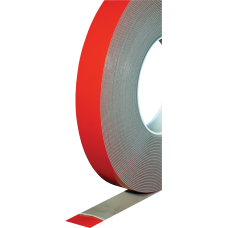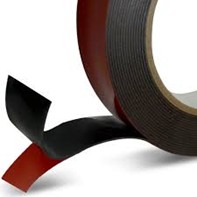
Low Surface Energy Tape – 1.1mm Thick – 33m Roll

Price range: £15.50 through £121.75 excl. VAT

SKU: QT600B.LSE

Description

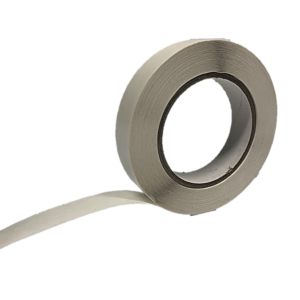
A double-sided, black acrylic foam tape, designed for difficult to stick substrates – Low Surface Energy.

High performance, excellent for bonding low and medium surface energy materials e.g. Powder Coated Metal, Plastics etc.

Offers design flexibility with it’s viscoelasticity and powerful ability to bond to a variety of surfaces.

Suitable for long term bonding applications indoor and outdoor.

Unaffected by UV.

High Temperature resistance.

Available in various Widths.
Tech Sheet


Reviews

There are no reviews yet.

Only logged in customers who have purchased this product may leave a review.

What is Low Surface Energy?

Low surface energy refers to a material property where molecules have a weak attraction to one another, making it difficult for adhesives to bond effectively.  Common examples include many plastics like polyethylene, polypropylene, and polystyrene, as well as non-stick materials like PTFE.  Adhesives “wet out” poorly on these surfaces, causing liquid droplets to bead up instead of spreading and forming a strong bond.

Characteristics of low surface energy materials

  • Weak molecular attraction: The molecules on the surface have very little attraction to other molecules.
  • Poor wettability : Adhesives and other liquids tend to bead up and will not spread easily across the surface, a phenomenon often seen on a freshly waxed car.
  • Hard to bond: The weak surface forces make it challenging for adhesives to stick and create a strong, reliable bond.
  • Common examples: This category includes many plastics such as polyethylene, polypropylene, and polystyrene, along with materials like PTFE (Teflon) and nylon.

Why does it matter if something has a Low Surface Energy?

Special adhesives and preparation methods are often required to bond effectively to low surface energy materials, unlike high surface energy materials where bonding is generally easier.

How long is the roll?

33 metres on a roll.

How Do I Apply The Tape? See our 'How To' video.

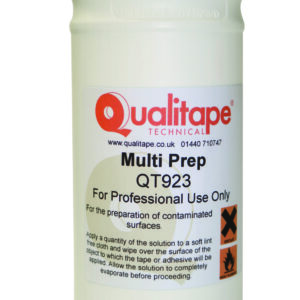
  1.  Ensure surface is clean and dry before applying tape.  Apply isopropyl alcohol cleaner, our QT923, using a clean, dry cloth.  Wipe across the surface in one direction removing all surface contaminants, e.g. dust, dirt and oil.  Let it flash off so it dries on the surface.
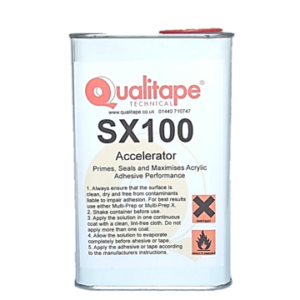
  2. In many cases an additional primer is not required when bonding to powder coat.  However, as there are many different types of powder coat we would suggest carrying out your own trials.  If a primer is required we would suggest our SX100, which can be applied using a clean, dry cloth and will help to strengthen the bond.  Wipe a small amount in one direction across the surface.  Leave for a few minutes to flash off.
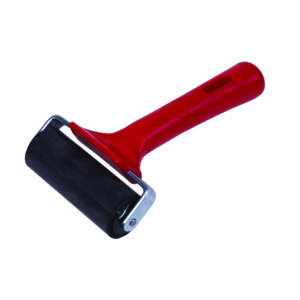
  3. Remove liner, taking care not to touch the tape too much.  Apply tape to surface with firm, even pressure using a pressure roller or the palm of your hand.
  4. Tape will increase in strength over a period of 48-72 hours while it fully bonds.

https://www.youtube.com/watch?v=Yn92v8GHbTs

How Do I Remove The Tape?

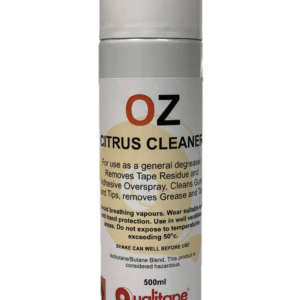
To remove acrylic foam tape, use a hairdryer or something similar to soften the adhesive, then gently pull the tape off.  For stubborn residue, apply our QT044 Pure Citrus Cleaner, leave for a few minutes and then, using a scraper, gently remove any remaining residue.

How Do I Store The Tape?

Correct storage of the tape is critical, ensuring it is placed in a plastic bag after use to avoid any contamination from dust and grease and kept in a dry, clean area.

Will sudden changes in temperature affect the tape?

Thermal expansion causes tape to expand or contract with temperature changes, affecting its length and thickness.

Therefore, fluctuations can cause the tape to expand or contract and if applied in the wrong setting it can cause the tape to fail.  It is important to take any sudden temperature variances into consideration, e.g. below air conditioning units, heaters etc.

Why has my tape failed?

  • The surface may be contaminated with dust, dirt or grease prior to application of tape.
  • Insufficient pressure was applied to the surface of the tape after application.
  • The tape/substrate was too cold – check application temperature.
  • Differential expansion – the 2 substrates expanded/contracted at different rates due to environmental factors, e.g. temperature.
  • Not enough product added – insufficient coverage of tape used for the application, e.g. heavy loads/substrates.
  • Incorrect tape used for application.

©Qualitape

Website by Unity Online